

Emergency preparedness · 9-minute read
Texas Was 5 Minutes From a Grid Collapse
It could have left millions without power for months. Could your family last three days?
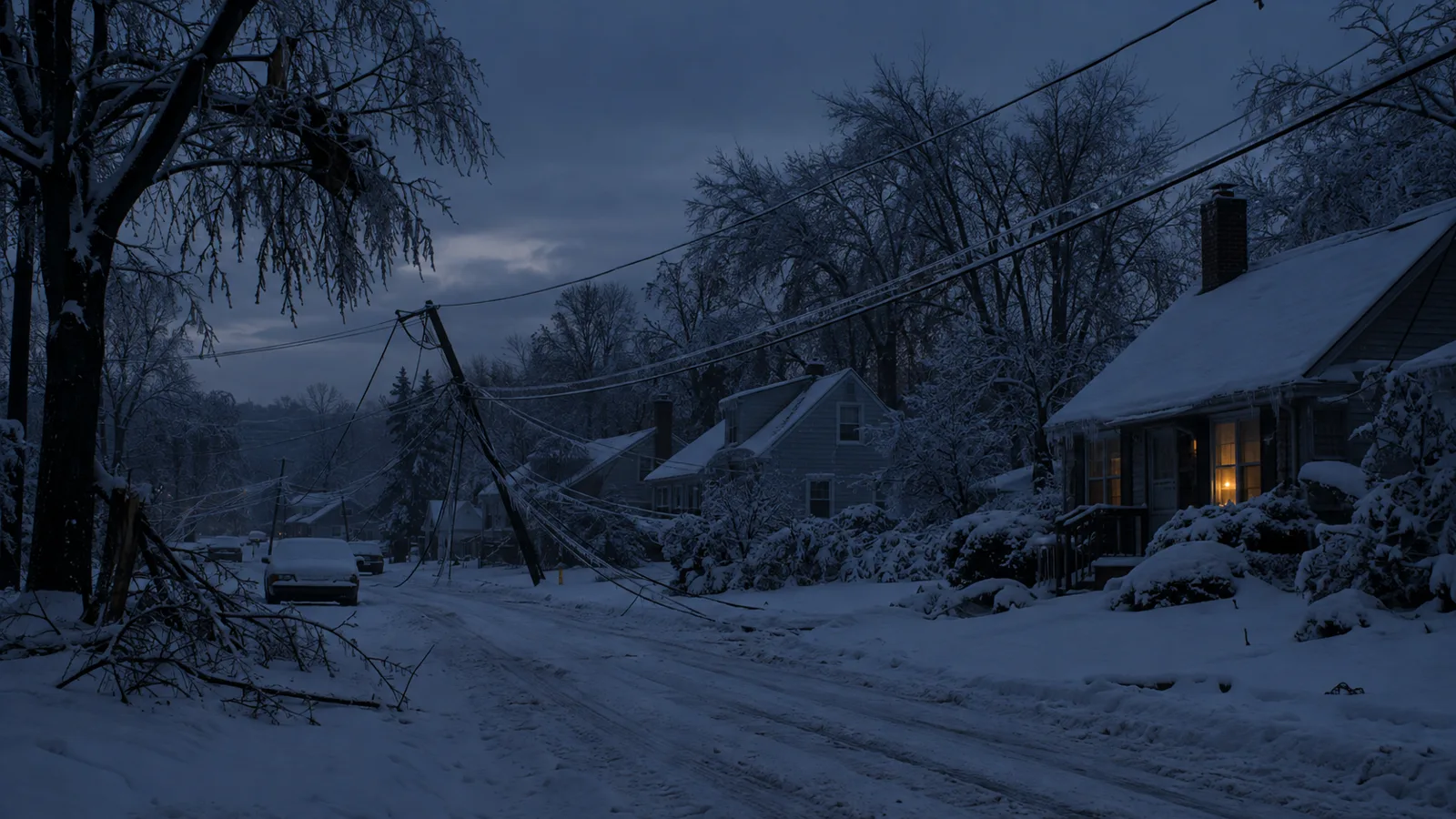
At 1:51 a.m. on February 16, 2021, the Texas power grid began to fail. A brutal winter storm had frozen power plants across the state, and operators had minutes to act. They cut power to millions of homes at once.
It worked—barely. Officials later said the grid came within 4 minutes and 37 seconds of a collapse that could have left Texas dark for months.
Even the near-miss was a disaster. Millions of families spent days without heat or safe water in record cold. The official death toll reached 246, most from hypothermia.
This didn't happen in a remote village. It happened in the energy capital of America, in homes a lot like yours.
“72 hours” is a minimum, not a promise
The government's own preparedness site, Ready.gov, tells families they may need to survive on their own for several days after an emergency. FEMA says to plan for at least 72 hours.
Most people hear that as a promise: hold out three days, then help arrives. It isn't. It's a floor.
A week after Hurricane Helene in 2024, more than a million homes were still dark, and families in Asheville were carrying drinking water home in buckets. After Hurricane Maria, it took nearly 11 months to restore power to all of Puerto Rico.
Help does come. Just not always in 72 hours. So the real question is:
What happens in your house until it does?
Don't wait until your family is in the darkWatch the Free Survival Briefing Now →Before the storm even hits: the shelves
The trouble often starts before the power goes out.
Everyone remembers March 2020. Within days of the first lockdown news, grocery aisles across America were stripped bare. Toilet paper, of all things, became the symbol of a country that suddenly realized how little it had at home. Stores started limiting how much each customer could buy.
That instinct never went away. Anyone who has walked into a grocery store the day before a hurricane or ice storm has seen it. Bottled water, bread, batteries and propane often disappear hours after a forecast turns serious. Stores don't keep weeks of extra stock in the back; they're built on constant deliveries. When everyone buys at once, the shelves empty faster than trucks can refill them.
Which means the moment most people start preparing is the exact moment it becomes hardest to do.
Now the lights go out.
The countdown nobody hears
At first it feels like any other outage. That's the trap.
The heat goes with the lights. The well pump stops. The garage door won't open. The refrigerator starts a countdown most families don't even know is running—a few hours for the fridge, a day or two for the freezer.
Every phone in the house becomes a battery with a timer on it. And the cell towers those phones depend on run on backup power that doesn't last forever.
Nobody in the house is worried yet. They should be.
The first dangerous decisions
By morning, the house is cold, the phones are dying, and nobody knows when the power is coming back.
The food in the fridge is now a gamble. The kids are asking questions you can't answer. And cold, frightened people start doing dangerous things—bringing grills inside, running generators in the garage, sitting in idling cars to get warm. In Texas, carbon monoxide killed at least 19 people who were only trying to stay warm.
Someone makes a run to the store. They find what everyone else found: bare shelves, long lines, card readers down, cash-only signs. They come home with less than they left for.
Free printable · Two pages
Don't wait for the forecast
Check the essentials your household needs for the first 72 hours—and finish a simple family plan while the lights are still on.
When everything else starts to fail
The second day is when people realize that almost everything they depend on quietly runs on electricity.
The taps sputter as water pressure drops, and boil-water notices go out—if you can even hear them. The pharmacy is dark, and the prescription that was due next week is due now. Toilets stop refilling. Trash piles up. The few gas stations with power have lines around the block. The rest are just empty lots with pumps.
In Texas, people died when oxygen machines and dialysis stopped. After Helene, families in Asheville carried drinking water home in buckets.
The house you live in every day is starting to feel like somewhere else.
When the rules start to slip
By the third day, something shifts. It's no longer an outage. It's a situation.
Three nights of broken sleep. Children who were bored on day one and are frightened now. The food is gone or going bad. There's no news you can trust—only rumors passed from porch to porch. The damage is worse than they said. The stores won't be restocked this week. Help is going somewhere else first.
The street feels different. Cars you don't recognize roll past slowly after dark. The neighbor who waved on Monday doesn't wave anymore; he's counting his gas cans. Someone knocks on your door asking for water, and you have to decide, standing in the doorway, how much you can spare for a stranger when you don't know how long your own will last.
Tempers shorten. Arguments start over things that wouldn't have mattered two days ago. Every trip outside burns fuel you can't replace. Every hour you stay costs something too.
And the questions keep coming, with no one to answer them but you:
Do we stay, or do we go? Where would we even go—on half a tank? How much water is left? What happens when Mom's medicine runs out? What if it's another week?
What if it's longer?
What if the power doesn't come back?
This is the question most families never let themselves ask. It's also the one that matters most.
In Texas, grid officials said a few more minutes could have meant months in the dark. In Puerto Rico, it took nearly a year. In the mountains of North Carolina, some families waited weeks for power and longer for water from the tap.
Everything is connected. Power runs the water pumps, the fuel pumps, the cell towers, the pharmacy computers, the card readers and the trucks that restock the shelves. When the electricity stays off long enough, those systems don't fail one at a time. They fail together.
What happens after that—in an ordinary neighborhood where nobody planned for it—is something most people have never seriously thought about. The people who train for it don't talk much about flashlights and canned food. They talk about what changes after day three, who you can still count on, and the decisions that have to be made before things get that far.
That's the part no checklist covers.
See what happens after day threeWatch the Free Briefing Before You Need It →Supplies don't make decisions. People do.
Here is what separates the families who come through these events shaken but safe from the ones who don't. It usually isn't how much gear they own.
It's whether someone in the house had already thought it through.
A case of water doesn't tell you when it's time to leave. A flashlight doesn't decide who checks on Grandma, which food gets eaten first, how to keep a newborn warm, or what to do when the pharmacy is closed. Those answers come from a plan—and from a person who has walked through the hard scenarios before living them.
That's how the military and first responders train. They rehearse decisions long before they need them, so that when things go wrong, they act instead of freeze. Calm under pressure is rarely a personality trait. It's what happens when you've already decided what you'll do.
Most families have never done that. They have a few supplies and a hope that the power comes back soon.
Hope isn't a plan.
Why now, not later
There's never a convenient time to prepare. But there is a wrong time: after the forecast.
Atlantic hurricane season runs through the end of November. Winter storm season is only weeks away. And as every family that went shopping before a storm has learned, the moment a threat hits the news, you're competing with everyone else for the same water, the same batteries and the same generators.
The families who come through best are the ones who prepared while the shelves were still full and the lights were still on.
The next step
A blueprint for the person your family counts on
That gap is what this preparedness training is designed to close.
The program is designed to turn ordinary Americans into calm, capable protectors when the systems they depend on stop working. It focuses on how to prioritize in the critical first hours, how to stretch what you have, how to keep a household running without the grid, and how to make clear decisions when everyone around you is panicking.
It isn't a replacement for official guidance or a basic emergency kit. It's the part that comes after: the plan, the skills and the confidence to lead your family through it.
A free video briefing explains what can happen when systems fail and help is delayed—and what a prepared family can do about it. Fair warning: it's blunt. It goes further than this article does, and it doesn't sugarcoat how fragile the systems we depend on really are. But if you're the person your family would turn to on day three, watch it now—while the lights are still on.
If you're the one your family would turn to on day three, watch this while the lights are still on.
Free preparedness briefingWatch Now—Before the Lights Go Out →